Six times a rebel


Barcelona, Spain
“I am grateful to fate for three gifts: to have been born a woman, from the working class and an oppressed nation. And the turbid azure of being three times a rebel.”
Maria-Mercè Marçal1
She was established in the legacy of many of those born in the 80s, when she had a few years left before departing. First, she did it without us realizing it, with her “solitude of small feet, without shoes”2, but she came to stay. And she did not only leave us this famous triple rebellion but many other things as well.
And today I want to claim three more.
I remember reading her verses for the first time in a university magazine within the LGBT section and I felt that, for the first time, my way of loving was no longer a “homeless love“3, that it was at least a “roommate love”, with the person who signed the verses and with many others who wrote on those pages.
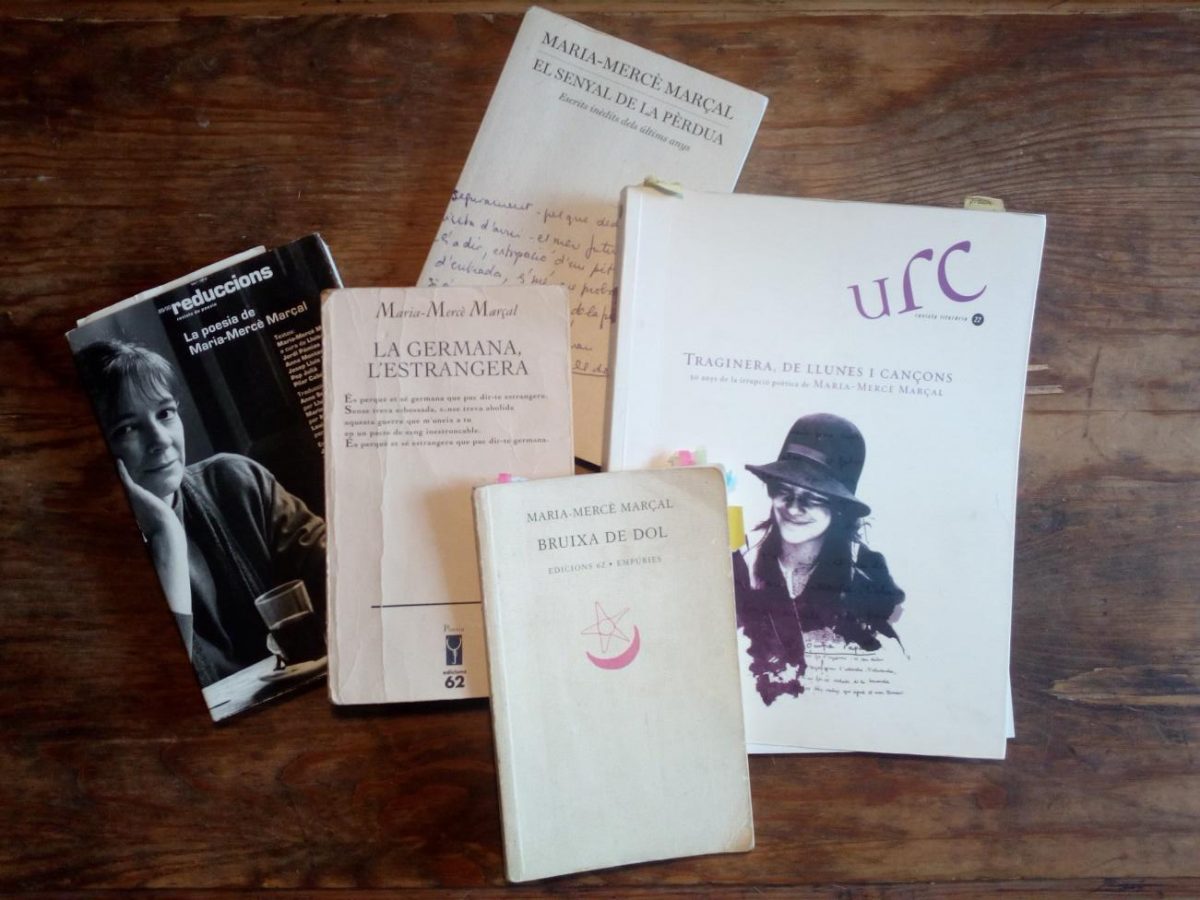
Then, finding myself in this shared solitude, I searched for her works in bookstores and I soaked up her poems, taking the moon to my den, undressing all the witches of their mourning, discovering that many of us who felt like strangers were, in fact, sisters4…
And all of this was possible thanks to her fifth rebellion, to choose the path of the letters till the end, and to live in verse and prose, without letting any of her words be banned.5
But, she still made her
sixth rebellion, the most important for me – she dared to speak, mute-less, from every corner, framing the sky and
putting her name underneath6so that it reaches all of us, makes
us lose the fear of expressing ourselves and never, never again will anyone be
silenced thanks to these rebellions.
1 Marçal, Maria-Mercè. Divisa (Cau de llunes, 1998). Translation of the poem by Sam Abrams.
2 Marçal, Maria-Mercè. “i ve la solitud de peus menuts,/ sense sabates” (Bruixa de dol, 1979).
3 Marçal, Maria-Mercè. “El meu amor sense casa” (- “My homeless love”-, Desglaç, 1988).
3 Marçal, Maria-Mercè. “Emmarco amb quatre fustes/ un pany de cel i el penjo a la paret./Jo tinc un nom/ i amb guix l’escric a sota.”. Divisa (Bruixa de dol, 1979).
4 Refers to her books Cau de llunes (Den of Moons), Bruixa de dol (Mourning Witch) i La germana, l’estrangera (Sister, Stranger). Translation of the titles by Robin Vogelzang.
5 Marçal, Maria-Mercè. Llenguda abolida (Abolished Tongue). Translation of the title by Robin Vogelzang.
6 Marçal, Maria-Mercè. “Emmarco amb quatre fustes/ un pany de cel i el penjo a la paret./Jo tinc un nom/ i amb guix l’escric a sota.”. Divisa (Bruixa de dol, 1979).